
Sleep Nutrient Guide
What food logs can show — and why a nutrient doesn't guarantee better sleep.
Nutrition and sleep: a connection with many factors
Research looks at connections between nutrition and sleep, but the studies differ greatly in participants, dietary patterns and measurement methods. The review by Peuhkuri and colleagues discusses this connection. This does not mean that there is a simple recipe for one nutrient to improve sleep for everyone.
What Vytrix gets from your food logs
The app adds available values of tryptophan, magnesium, vitamin B6, omega-3, caffeine and alcohol from your logged products and portions. The logged times can also provide additional context. Sleep-nutrition insights are part of Pro.
Missing values in the product database limit the outcome. The current daily overview counts missing tryptophan values as zero; it does not default to 1,1% of your total protein intake. A low total shown therefore does not prove a shortage.
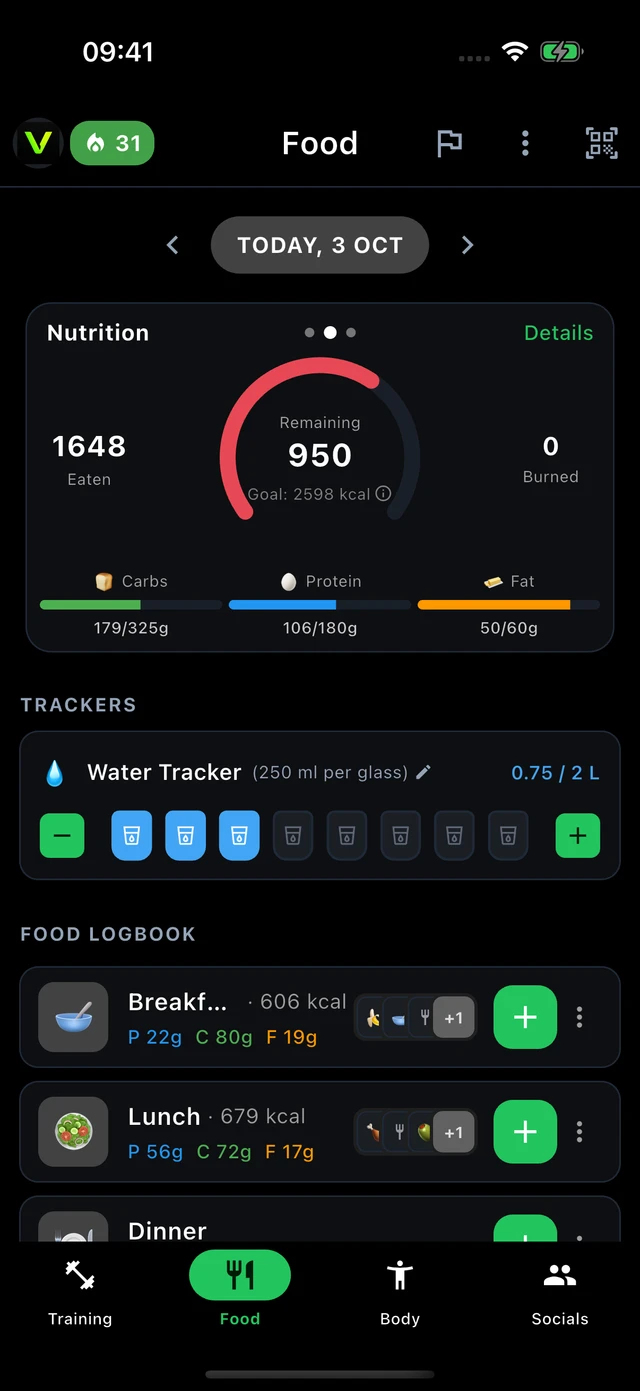
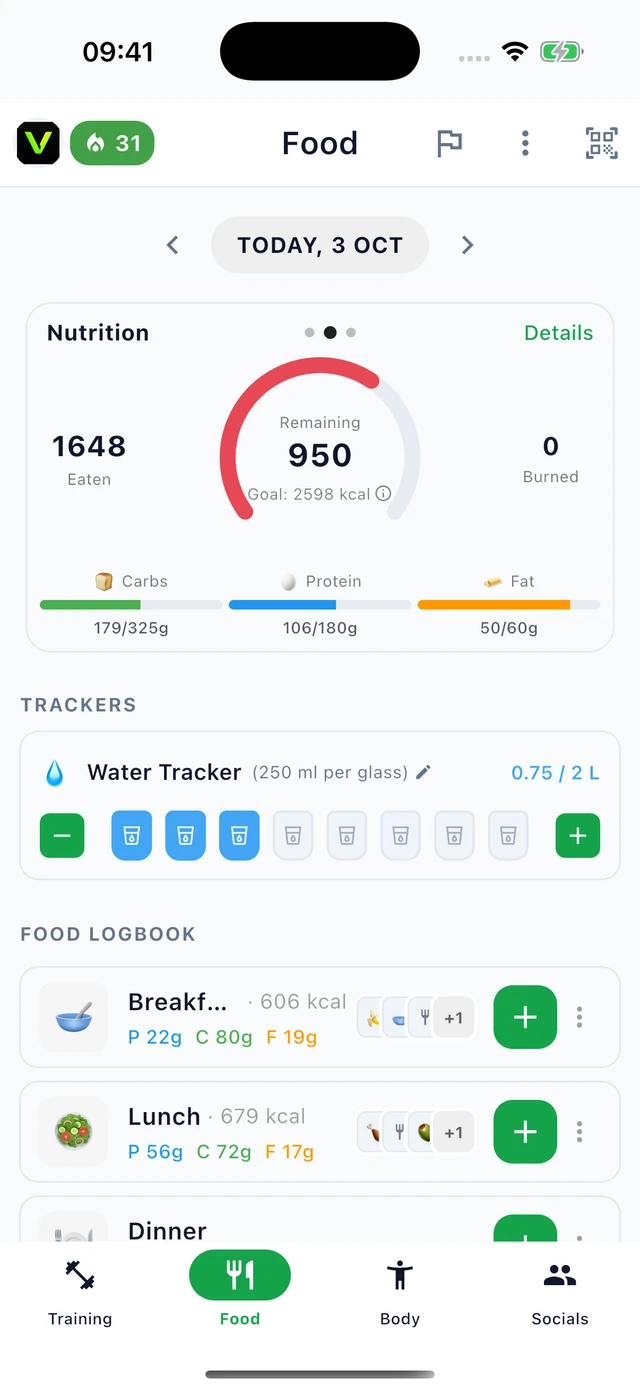
Your food diary as a starting point
Nutrient insights start with your logged products. This is the general food diary; missing product data remains a limitation for further analysis.
Real app image · example dataFrom research to interpretation
The study by Hansen and colleagues examined oily fish in a specific group of participants. That is not proof that a fixed daily amount of DHA improves sleep in every healthy adult. The previous description as a general supplement study was too definite.
Use the nutritional data to see patterns in your own logs. The app does not detect any deficiencies and the insights described here are not advice to take supplements.
Sources
- Peuhkuri, K. et al. (2012) — Diet promotes sleep duration and quality
- Hansen, A. L. et al. (2014) — Fish consumption, sleep, daily functioning, and heart rate variability
No external expert review has yet been published for this page. Learn how we create our content. Do you see an error or are you missing a source? corrections@vytrix.app